
Train Heavy to Race Light The 80/20 IPPT Shoe Strategy

TL;DR: Train about 80% of your runs in durable daily trainers like the Nike Air Zoom Pegasus 40 or Brooks Ghost 16 to build aerobic capacity and bulletproof your legs, then unleash carbon-plated racing shoes on test day to convert that engine into maximum speed.
Introduction: The Brutal Truth About Your Racing Shoes
You dropped three hundred dollars on elite carbon plated racing shoes. Kiasu. I get it. You want that Gold bonus. But here is the brutal reality. Super shoes will not fix a garbage aerobic base.
Wear those aggressive rocket ships for every slow evening jog around camp and you will absolutely shred your Achilles tendons. Snap. Gone. Siao, right? Carbon plates are violent mechanical springs. They mask your physical weakness.
You cannot build a massive engine while a stiff carbon shank snaps back under your heel in the choking humidity. Feel that sharp friction of a poorly fitted heel cup? That is your foot fighting the shoe. Chialat.
Know your baseline first. Go check your current standing on the IPPT calculator. Then we talk strategy.
80 percent of your running must be slow. Heavy. Boring. Build the engine first. Then buy the speed. Perfect
Choose Your Weapon The Pegasus 40 and The Ghost 16
You need a daily workhorse. Right now. Not tomorrow. Absorb the punishing impact of hot concrete. No trampoline effect. These are not sexy. They build your engine.
Feature | Nike Air Zoom Pegasus 40 | Brooks Ghost 16 |
|---|---|---|
Best For | Narrow feet, agile runners, speed training | 🏆 Top Overall Pick |
Fit Style | Narrow, performance-focused profile | 👑 Female Precision |
Technology | Dense React Foam cushioning | 🛡️ Wide Foot Warrior |
Best Use Case | Firm ride with very little bounce. Your calves will work harder during long runs. | 🚀 The Aggressive Sprinter |
Buy Link |
NIKE Men’s Air Zoom Pegasus 40
- The Core: Dense React foam base.
- The Tech: Dual Zoom Air units.
- The Verdict: What does that mean for you? It means you get just enough kinetic protection to shield your shins during a brutal five kilometer recovery run under the blazing sun. But it absolutely refuses to do the mechanical work for you. Your calves have to fire. Your glutes have to engage. The narrow fit locks your midfoot down tight.
You feel the dull thud of the pavement but your bones remain safe. It has an incredibly durable rubber outsole that grips wet park connectors flawlessly. You will drag this shoe through hundreds of miserable kilometers and it will survive. This shoe forces physiological adaptation. Grab it. Use it.

Brooks men’s Ghost 16 Sneaker
- The Core: Nitrogen infused DNA cushion.
- The Tech: Deep compression shock absorption.
- The Verdict: maybe you carry more mass. Or maybe you have wide feet that get suffocated by narrow toe boxes. This shoe is a tank. It looks like marketing fluff to you? It is not. That thick slab of foam is a shock absorber for heavier frames. When you land hard on a tired heel that nitrogen infused cushion compresses deeply. It protects tight calves from micro tears. It stops friction blisters completely.
Your foot sinks in and feels secure. Then you have to push off with your own raw power. You will not feel fast in this shoe. That is the entire point. It makes the training harder so the racing feels easier. It is heavy. It is bulky. And it is exactly what you need to grind out base miles when your legs feel like lead.
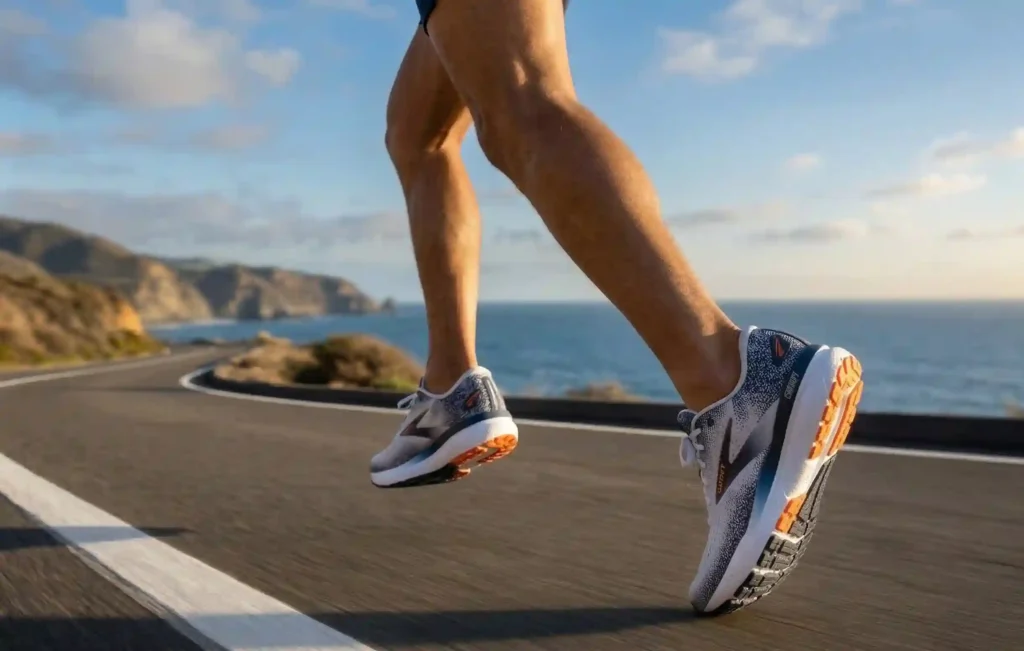
The Anatomy of a Daily Trainer
Stop looking for shortcuts. You want to know why these heavy shoes work? Look at the anatomy. Look at what you are actually strapping to your feet. These are not magic. They are tools of absolute suffering. And suffering builds the engine.
Look at the foam. We are talking about thick blocks of standard EVA or dense nitrogen injected polyurethane. It is not designed to bounce. It is designed to die under your weight. When your foot strikes the blistering hot concrete of the park connector, that foam crushes. It absorbs the violent shock. It protects your bones. But it gives you absolutely nothing back. Zero kinetic return. You have to physically drag your foot back off the ground. Your glutes must fire. Your hip flexors must engage. You are doing one hundred percent of the mechanical lifting.
Now look at the outsole. Turn the shoe over. You see those massive slabs of black carbon rubber? That is armor. Racing shoes have exposed foam that shreds after fifty kilometers. A daily trainer has a thick rubber hide. It grips slick pavement flawlessly after a heavy monsoon downpour. It survives the friction of hundreds of miserable base miles. You will wear out your mental resolve long before you wear out this rubber.
Bulletproofing Your Tendons and Lungs
This is basic human physiology. The body adapts to the exact physical stress you force upon it. Dragging a heavy shoe through thick evening humidity is pure stress. You want to act garang on the track? You have to earn it on the pavement first.
Without a stiff carbon plate doing the mechanical work, your lower leg has to stabilize every single stride. Your calves burn. Good. Let them burn. That micro trauma is exactly how your muscles grow denser. Your Achilles tendon is forced to stretch and contract naturally under load. Over weeks of heavy base training, that tendon thickens. It turns into a steel cable. It becomes bulletproof. When you finally ask it to sprint at maximum effort on test day, it will not snap. It will dominate.
Then there is your aerobic capacity. Heavy shoes make your legs feel like lead anchors. When the legs struggle, the lungs must compensate. You will gasp for air on a pace that usually feels easy. Your heart rate will spike. Do not panic. You are building a massive cardiovascular engine. You are expanding your lung capacity by sheer force of will.
The Ultimate Track Day Contrast
Then comes the magic. The ultimate payoff. You spend two grueling months grinding in your heavy daily trainers. You feel slow. You feel exhausted. But your internal engine is massive.
The morning of your IPPT finally arrives. You leave the heavy workhorses in your locker. You lace up those three hundred dollar lightweight carbon racing shoes. You step onto the stadium track.
The physical contrast is violent. Suddenly your legs feel completely weightless. You possess the massive lung capacity built by the heavy shoes. Now you combine it violently with the extreme mechanical advantage of the carbon plate. Every step launches you forward. You are not running. You are flying. You built the engine. Now you get to use the rocket fuel.
Ready to pick your test day weapon? Go read my ultimate guide to the best carbon plated shoes to crush your IPPT Gold timing.