The NSman Lifecycle: A Strategic Guide from ORD to M-Day
TL;DR: NS life after ORD is a long game understand ICT cycles, plan IPPT early, respect Manning, and you’ll clear ORNS calmly instead of panicking at the end.
YoSo, you’ve just ORD-ed. You’ve collected your watch, shook your CO’s hand, and you think the “Green Life” is behind you. But in Singapore, ORD isn’t the end it’s the beginning of a 10-cycle marathon known as the Operationally Ready National Service (ORNS) phase.
As a trainer who has seen thousands of men transition from “Chiong Sua” soldiers to “Uncle” NSmen, I know the system can be confusing. Official sites give you the rules, but they don’t give you the strategy. When is your next ICT? When do you stop taking IPPT? When can you finally throw away those combat boots?
This is your veteran-approved roadmap to the next 10 to 20 years of your life.
The 10 Year Training Cycle ICTs What Most NSmen Miss
Let me ask you something first.
Do you actually know why some people clear their 10 training years smoothly, while others keep getting stuck longer than expected?
After coaching NSmen for 15 years, I can tell you this. It is usually not about luck. It is about understanding how the system really works.
First Important Thing You Must Know
A SAF Training Year only counts if you complete the full requirement.
This is where many guys get caught. They assume once they show up, one year is cleared. Then later they realise the year did not count and become very kan cheong.
Now let us break it down properly.
High Key ICT What It Really Means for You
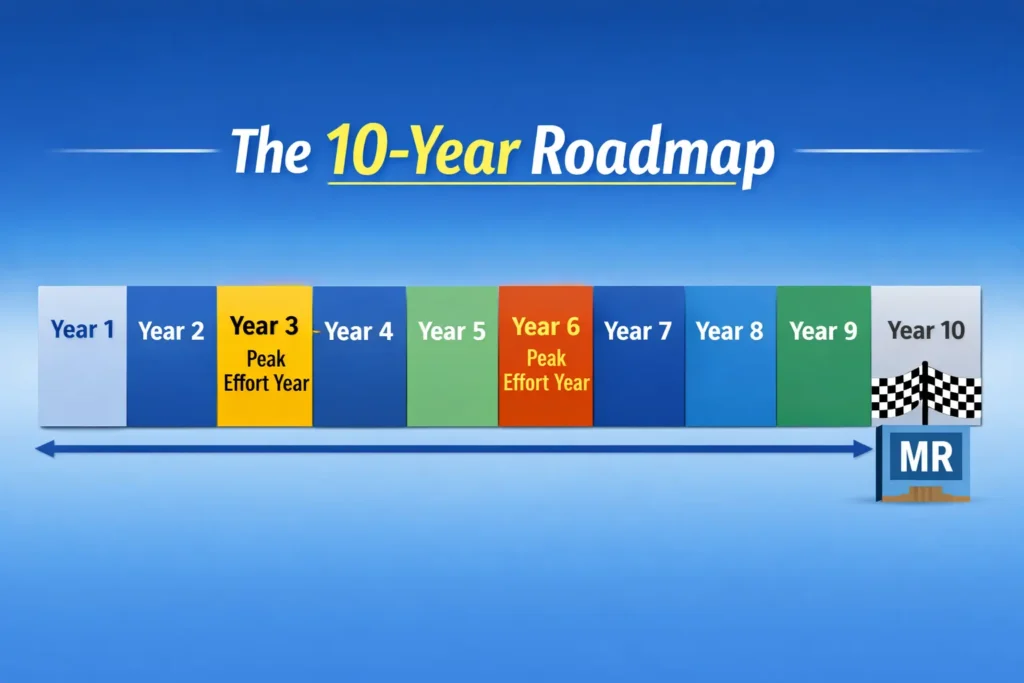
High Key ICTs are usually seven days or more. Sometimes up to two weeks.
Think of these as your active years.
This is when things get serious. Field training. Evaluations. Sometimes ATEC. From what I see, Years Three to Six are usually the toughest.
Here is a trainer tip you will not see in official brochures.
If you fail IPPT during a High Key year, you lose your evening rest time to Remedial Training. I have seen guys at Maju FCC and Kranji Camp finishing a long day, then changing out again for RT while others rest. Very sian.
My advice. Treat your High Key years as your peak fitness years. Do not wait until the last minute.
Low Key ICT Not a Free Holiday
Low Key ICTs are shorter. Usually one to six days.
Many people think Low Key means relax. Careful.
Yes, it is lighter. Mostly refreshers, briefings, admin. But I have seen NSmen get surprised by sudden IPPT or fitness requirements because they assumed too much.
Stay ready. Do not let your fitness drop completely.
The Manning Phase Where People Get Burned
This is the standby period.
Always check your Manning colour.
Yellow means you can still go out, but stay sober and contactable.
Green means your bag should already be packed by the door.
Very important advice. Do not book nonrefundable holidays during Manning. I have coached more than one person who lost money and still had to report. No appeal. No sympathy.
Final Coach Advice
Plan your fitness around High Key years.
Respect Low Key years.
Take Manning seriously.
Once you understand this cycle, NS life becomes much calmer. You stop panicking. You start planning. That is how experienced NSmen play the long game.
The IPPT Cycle The Annual Fitness Tax
Let me clear this up once and for all, because this part causes a lot of confusion every year.
I always tell my trainees this. IPPT is not random. It runs on a fixed annual cycle. Once you understand it, your planning becomes much easier and you stop being so blur.
Your IPPT Year Is Tied to Your Birthday
Your IPPT window starts on your birthday and ends the day before your next birthday.
Not calendar year. Not SAF year. Birthday.
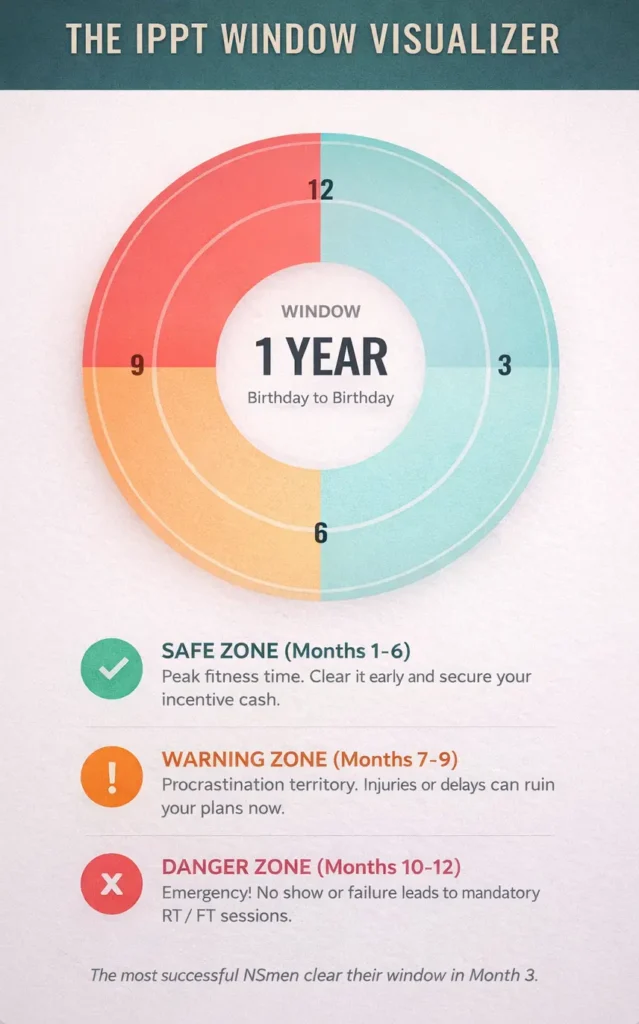
I have seen guys at Bedok Stadium rushing to book IPPT in panic mode because they thought they still had time. Then suddenly realise their window closes in three days. This situation that can be avoided if you mark your birthday window early.
My advice. Treat your birthday as your annual fitness checkpoint. Every year same time, same responsibility.
Do Not Aim Just to Pass Aim for the Cash
Many NSmen tell me, Coach, I just want to pass can already.
That mindset is costing you money.
The difference between Silver and Gold can be as small as two sit ups or a slightly faster run.
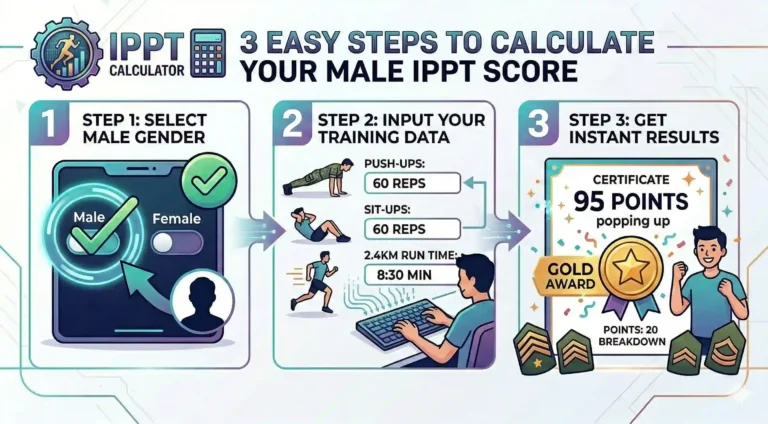
Before you start training blindly, use an IPPT calculator to see exactly how many reps or seconds you need to hit Silver or Gold for your age group.
Use an IPPT Calculator early. You will be shocked how small improvements can jump you from three hundred dollars to five hundred dollars.
I always tell my trainees this. That extra two hundred dollars is the easiest money you will earn all year. One extra training session a week can make that difference.
NS FIT Not a Punishment If You Use It Right
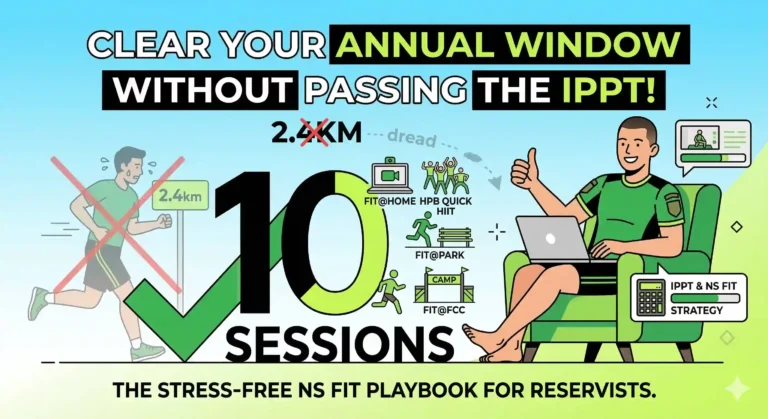
If you do not pass, you enter NS FIT.
Here is something many people do not know. A lot of NSmen actually choose NS FIT voluntarily.
Why?
Ten sessions. Sixty minutes each. Structured workouts. You get HIIT, strength work, even Yoga sessions. Locations all over Singapore. Parks, gyms, FCCs like Maju or Khatib.
For someone who struggles with discipline, this is basically free guided training.
I have seen many guys come out fitter after NS FIT than before. If you are struggling, do not fear it. Embrace it. Build your base properly, then come back stronger.
That is how you stop treating IPPT like a punishment and start using it to your advantage.
The Finish Line Mindef Reserve and M Day
Coach talking to you, straight and simple.
After 15 years coaching IPPT, I can tell you this is one topic many NSmen still blur (confused) about. So let’s make this easy. Read it like a quick check in with your coach.
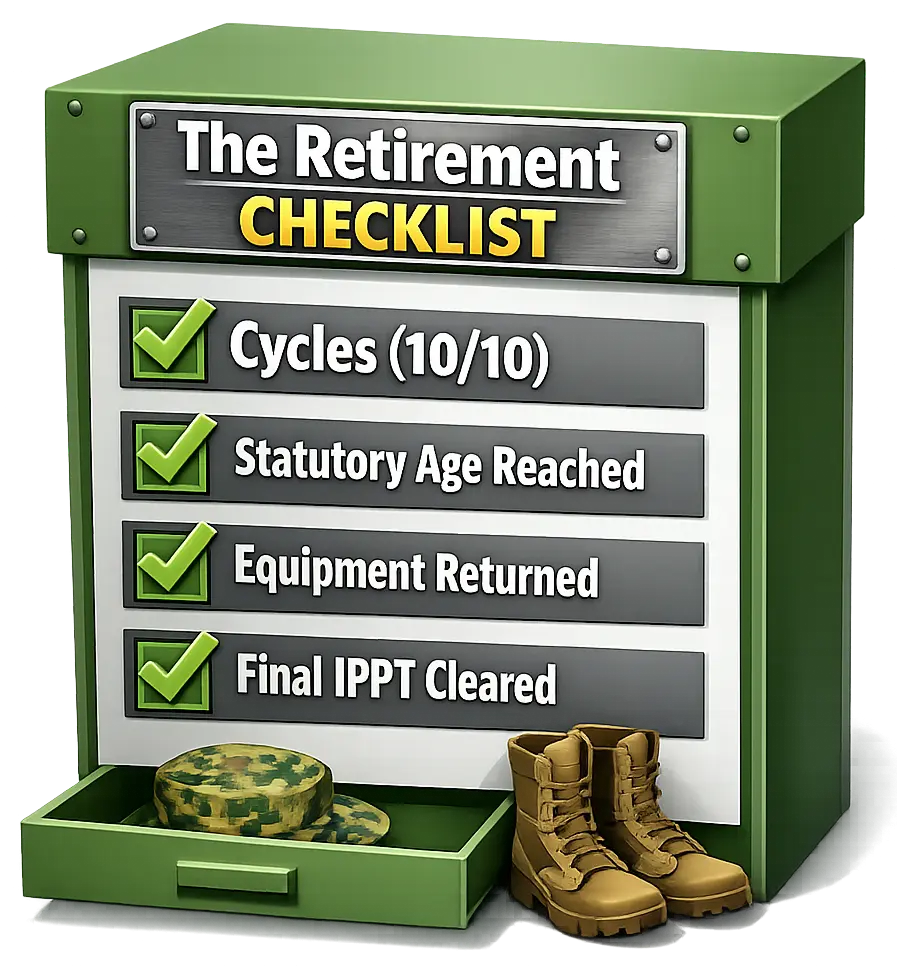
First, let me ask you
Tick these in your head as you read.
If you hesitated on any of these, keep reading.
Completing ORNS
This is what people still call ROD.
Step-1
Important reminder from coach
Completing ORNS does not mean NS is fully over yet.
Mindef Reserve Status
This is the real finish line.
Once you reach MR, everything stops.
Step-2
About the Watch and Pen
Let me clear this myth once and for all.
It is simply a thank you. A symbolic moment that marks the shift from soldier to statesman. Nothing to stress about.
Coach’s Final Advice
Quick reality check before you go.
I have seen hundreds of guys panic at the end for no reason. Know your timeline, finish properly, and move on steady. That is how you end NS the right way.
Staying Fit after “M-Day”
When you finally reach MR, the uniform comes off, but your body stays with you for life. I always tell my trainees this. Just because you no longer need to pass IPPT does not mean you stop moving. Over the years, I have seen many 45 year old uncles (older men) outrun 20 year old NSFs on the track. Age is not the main issue. Lifestyle is.
Your health is the one thing you carry forward after NS ends. No rank, no award, no watch or pen can replace it. Keep running, keep training, and take care of your body. That is the real long term win.