The IPPT Strategy Guide: How to “Game” the System for Gold and Silver

TL;DR: Learn how to game the IPPT scoring system for Gold or Silver by using the IPPT Calculator to find the easiest points, build smart buffers, and train strategically instead of blindly grinding.
Most NSmen walk onto the fitness corner (FCC) and just hope for the best. They run as hard as they can, pump out push-ups until they collapse, and then wonder why they missed the Silver award by just one point.
After two decades of coaching, I can tell you: IPPT is a game of math as much as it is a game of fitness. In this guide, I’m going to show you how to use our IPPT Calculator to find your “Path of Least Resistance”, the smartest way to hit your target score without burning out.
Understanding the Score to Effort Ratio
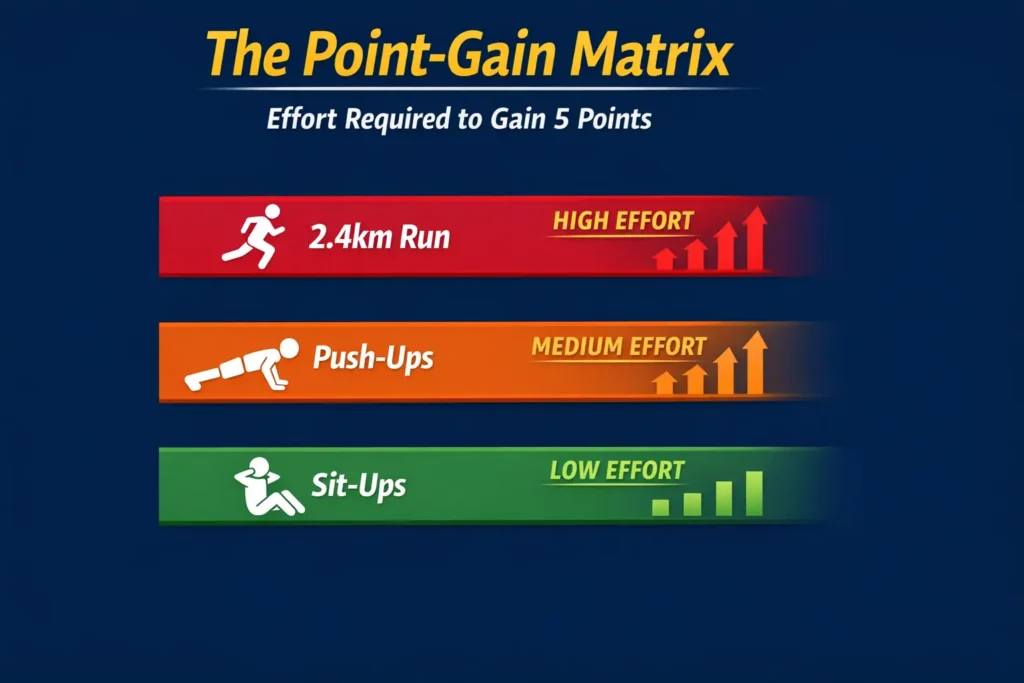
This is something I wish more people understood earlier. Not all IPPT stations are created equal. Some give you points cheaply. Others make you work very hard for very little return. If you train everything the same way, you waste time and energy.
The Reality Check
For most trainees, gaining five points in sit ups is often three times easier than gaining five points in the two point four run. Sit ups improve fast when your technique and rhythm are right. Running, on the other hand, takes weeks of conditioning just to shave a few seconds. That is not an opinion. That is what I have seen on the ground year after year.
Point Saturation
Every station has plateaus. You might push two more reps and get zero points because you are stuck in the same score band. But shave ten seconds off your run and suddenly you jump three points. This is why blindly chasing reps can backfire. You must know where the scoring table flattens out.
The Trainer’s Secret
Everyone has a natural station and a grind station. One improves easily. One fights you every step. Train smart. Milk points where they come cheap, and survive where they do not. That is how people hit Gold without burning out.
The Five Hundred Dollar Roadmap Strategic Award Tiers
Let me frame this the right way. IPPT is not just about fitness. It is about turning effort into cash. You sweat anyway, might as well get paid properly for it.
The Pass with Incentive Two Hundred Dollars
This is the baseline for every NSman. You are not training to break records. You are training to stay ready. Two short sessions a week is enough. One focused run, one strength session. Maintain your form, keep your numbers stable, and avoid last minute panic. This level is about consistency, not pushing until you break.
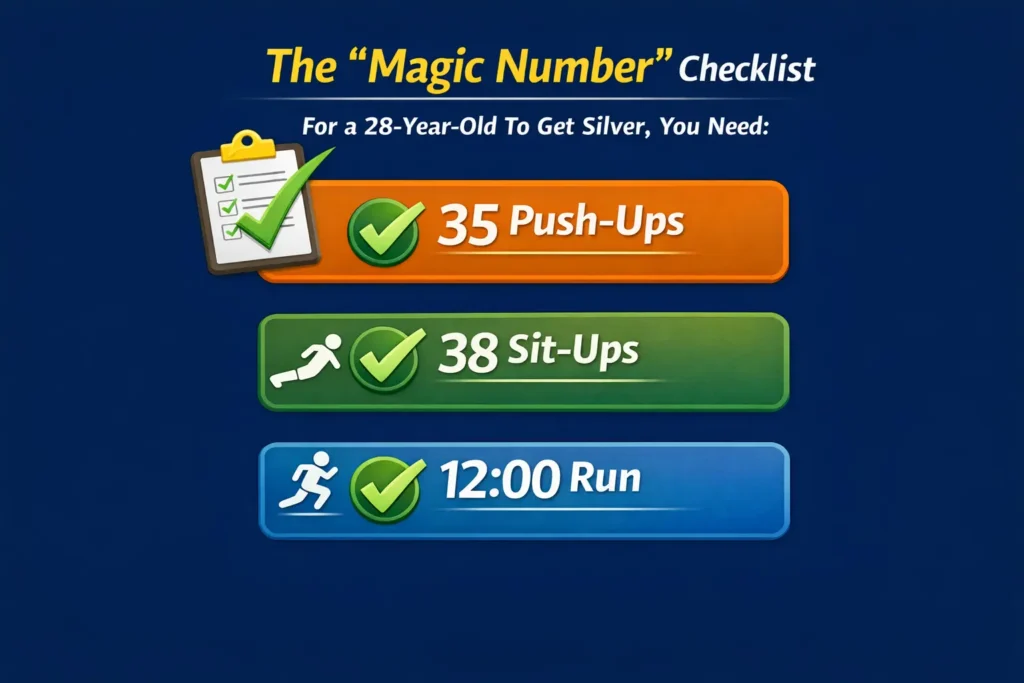
The Silver Sprint Three Hundred Dollars
For most working adults, Silver is the sweet spot. You get a solid payout without overhauling your lifestyle. With smart training, Silver is very achievable in eight to ten weeks. You focus on your strong stations, protect your weak ones, and manage fatigue. I see many trainees hit this comfortably once they stop overtraining and start training with intent.
The Gold Standard Five Hundred Dollars
Gold needs eighty five points or more. This is not about going all out once in a while. It is about showing up regularly. Three to four quality sessions a week beats one crazy session every ten days. Gold is for those who can stay disciplined when motivation drops. If you can stay steady and not be kan cheong, Gold becomes predictable, not scary.
How to Use the IPPT Calculator like a Pro
Before You Start
- Do not treat the calculator like a scoreboard
- Use it as a planning tool, not just to check your current score
Scenario Planning Checklist
Change your sit up reps and see how many points move
Adjust push up numbers to find easy gains
Test different run timings and compare point jumps
Identify which station gives you the biggest return
Once you see the pattern, your training becomes focused instead of random.
The One Point Buffer Rule
Always aim for one to two points above your target score
Expect nerves, sweat, and possible no counts on test day
Build a buffer so one mistake does not cost you Gold
I have seen many trainees miss Gold by one point and feel sian after. This checklist prevents that.
Age Group Advantage Checklist
Check how your score requirements change at thirty
Review the drop again at thirty five and forty
Use this advantage instead of ignoring it
Use this advantage instead of ignoring it
Tick these off and you stop guessing. You start training with confidence
Common Tactical Errors
After coaching for so many years, I see the same mistakes again and again. Strong, hardworking guys still fail not because they are weak, but because they train the wrong way.
Running every day does not guarantee success. Many trainees ignore push ups and sit ups, then arrive at the run already exhausted. The static stations drain your core and legs. IPPT is a full system test, not just endurance.
Aiming for the exact minimum is risky. One no count or small mistake and you miss your target. Always train with a buffer. I have seen too many trainees walk away feeling frustrated because they cut it too close.
Push ups and sit ups affect your breathing and pacing. Go too hard early and your run suffers later. Control your effort and stay calm. Do not be nervous. Smart pacing beats blind effort.
The Four Week Points Booster Plan
Let me give you a plan that actually works on the ground. This is my four week balanced attack that I use with trainees who want to lift their total IPPT score without burning out. Simple, focused, and realistic for working adults.
Phase 1: Foundation, Week 1
This week is about cleaning up your form and finding your true baseline. No rushing. No ego.
Focus on;
- Proper sit up contact and rhythm
- Full lockout for push ups
- Comfortable run pace, not chasing timing
You are teaching your body what clean reps feel like. Many people skip this and later wonder why points disappear. Foundation sets everything else up.
Phase 2: Volume, Weeks 2&3
Now we increase density. Not crazy volume, just smarter volume.
For sit ups and push ups
- Short sets with controlled rest
- Focus on maintaining form under fatigue
- Stop one or two reps before failure
This phase is where points start climbing. You will feel tired but not destroyed. If you feel smashed every session, you are doing too much.
Phase 3: The Taper, Week 4
This week is about sharpening, not grinding. For the run;
- Short intervals at faster pace
- Longer rest between efforts
- No long slow runs
Strength work becomes light and crisp. You should feel fast and fresh. By test day, your body knows the rhythm. Stay calm, trust the work, and collect your points. Consistency beats intensity every time.
Closing Advice The Mental Game
Do not let the ELISS machine get into your head. Know your numbers, trust your training, and stay calm on the mat. Use the calculator to track progress and guide your prep. Confidence comes from preparation, not luck.