IPPT Test Day Protocol: What to Eat, FCC Tips, and “No-Count” Insurance

TL;DR: Use this IPPT test-day protocol to perform at your peak, eat the right pre-test fuel, warm up dynamically, apply FCC ELISS hacks to prevent no-counts, and execute a calm 2.4km pacing plan for Gold/Silver.
You’ve done the training. You’ve used the IPPT Calculator to map out your reps. but as the clock ticks down to your booking at the FCC (Fitness Conditioning Centre), the nerves start to kick in.
I’ve seen guys who can do 60 push-ups in training get “No-Counted” down to 35 because they didn’t know how to play the ELISS machine. I’ve seen sub-10 minute runner cramp up because they ate a heavy prata two hours before the flag-off.
This is your Professional Test-Day Protocol. Follow this, and you won’t just pass; you’ll perform at your absolute peak.
The 3 Hour Rule: Fueling the Engine
Listen carefully. A lot of test day disasters start in the stomach, not the muscles. I have seen strong guys cramp up halfway through the run at places like Bedok Stadium and Maju FCC just because they ate the wrong thing at the wrong time. This rule saves scores.
T minus 3 Hours: Your Last Real Meal
Three hours before your reporting time is your final proper meal. Keep it boring and familiar. Go for complex carbs that release energy slowly. Good Choices are
Avoid oily food, fried stuff, heavy sauces, and dairy. These sit in your gut like lead once you start running. On the track at Kranji or Khatib Camp, that heavy feeling turns into cramps very fast. This is not the day to be adventurous. If you feel nervous, even more reason to eat safe.
The Sugar Spike Trap
Do not take sweets or energy drinks thirty minutes before the test. Yes, you will feel shiok for a while, then crash hard midway through your two point four. I have watched people fly out of the gate and completely die after one kilometer. Steady energy always beats sudden hype.
Hydration Done Right
Do not chug one liter of water just before you start. That sloshing feeling will mess with your breathing. Sip water consistently from morning onwards. Simple rule. If your pee is light or clear, you are ready.
Pro Tip Card: The FCC Survival Snack
If you are rushing from the office, grab a banana and a black coffee about forty five minutes before reporting. Fast energy, no bloating. Cheap, effective, and very steady.
Dynamic vs Static, the Warm up Secret
Listen to me ah. This one I see all the time at Bedok Stadium and Maju FCC. Guys come early, very hardworking, then they sit down and start pulling hamstring for 30 seconds, 40 seconds, face all serious. They think more stretch equals better run. Actually this is one of the biggest warm up mistakes for IPPT.
When you hold a long stretch before push-ups or running, your muscle becomes too relaxed. The power and snap inside the muscle go down for a while. That means when you start the test, your body feels a bit flat. Not injured, but cannot fire properly. Then you wonder why first lap already feel heavy. Very sian.
What we want before IPPT is not sleepy muscles. We want awake muscles. Dynamic warm up tells your brain and body that work is coming. Heart rate up slowly, joints moving, muscles warm but still springy.
I always tell my trainees at Kranji Camp this. Warm up should feel like switching on lights, not lying down to sleep.
Use this simple five minute warm up before your test or training.
The Five Minute FCC Warm Up Checklist
After this you should feel warm, breathing slightly faster, and mentally ready. Not tired. Ready to perform.
Trust me. Warm up right and half the battle already won.
FCC Survival Tips & Tricks Beating the ELISS Machine
Ok listen carefully. This one is not about fitness already. This one is about understanding the ELISS machine at FCC Camps. I always tell my trainees this. The machine is not against you, but it also will not help you. You must move in a way it can recognize. If not, you strong also no use.
First the sit up station
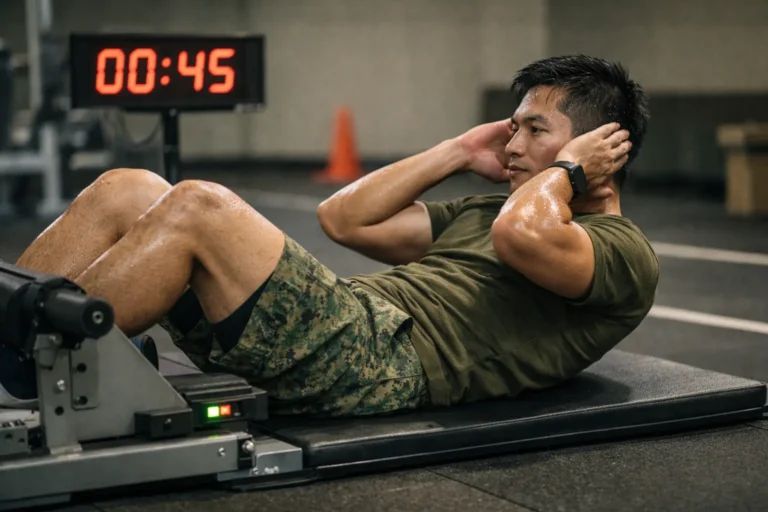
When you set up, make sure your heels are firmly planted. Not floating, not shifting. I see many people lose counts because their feet keep moving slightly. When you go down, do not just flop back. Control it. Let your shoulder blades touch the mat properly until you feel that clear contact. I always tell my guys to imagine a soft click. Not slam, not half touch. Clear and confident. Rush this part and the sensor sometimes misses. Then you get pek chek because you swear you did the rep.
Now push ups
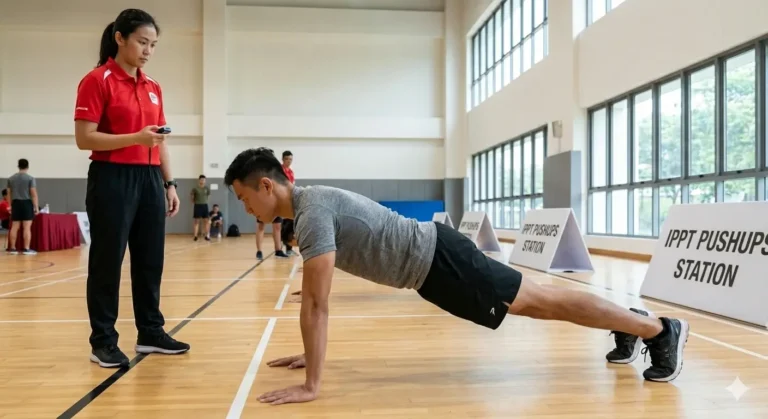
Hands must be directly under your shoulders. Too wide and your body angle changes. The camera might not see your chest depth properly. That is when no count happens. Elbows should bend naturally, not flare like chicken wings. Keep your body straight like a plank. From head to heel one line.
Clothing really matters more than people think.
Do not wear loose or baggy shirts. If the shirt hides your body line, the camera cannot see the hinge of your movement. Tuck in if you must. I have seen people lose five to eight reps just because the camera could not read them properly. Very saying.
PRO-TIP: Trainer’s bit The Eye Contact Rule
At the push up station, do not keep looking up at the screen. The moment you lift your head, your chest height changes slightly. That is enough for a no count. Keep your head neutral, eyes on the floor. Trust your rhythm. Let the beeps come to you.
This is FCC survival. Speak the machine’s language, and every rep will count the way it should.
The 2.4 km Mental Game
This one I talk to you as someone who has stood at Bedok Stadium and Kranji Camp hundreds of times watching the same story repeat. The run is not just legs. It is mostly your head.
Lap one is where most people destroy their own test.
You see the fast runners take off and suddenly you feel like you must chase. Ego come in. Then halfway through lap one you already breathing too hard. I always tell my trainees do not run other people’s race. Stick to the pace you already planned. That pace you found earlier is your anchor. Lock onto it. Let the rabbits go.
Second and third laps is where you settle.
Here is a small hack many people don’t use. Find someone just slightly faster than your pace. Not sprinting. Just steady. Run behind them, one to two meters. Let them set the rhythm. You don’t need to think so much. Just follow. At Khatib Camp this works very well because the track is open and windy sometimes. You save a bit of energy without realizing it.
Final 400 meters.
This is where marks are won or lost.
Your brain will start telling you to slow down. Legs heavy. Breathing messy. That voice is lying to you. You still have more inside. I have seen guys who thought they were done suddenly find another gear when they decide to commit. This is where you empty the tank.
I tell my trainees one thing. When you feel like stopping, that is just the start of the real work. Don’t be kiasi. Push through. Cross the line knowing you gave everything.
The Peak Performance Timeline
This is a step-by-step countdown for your test day.
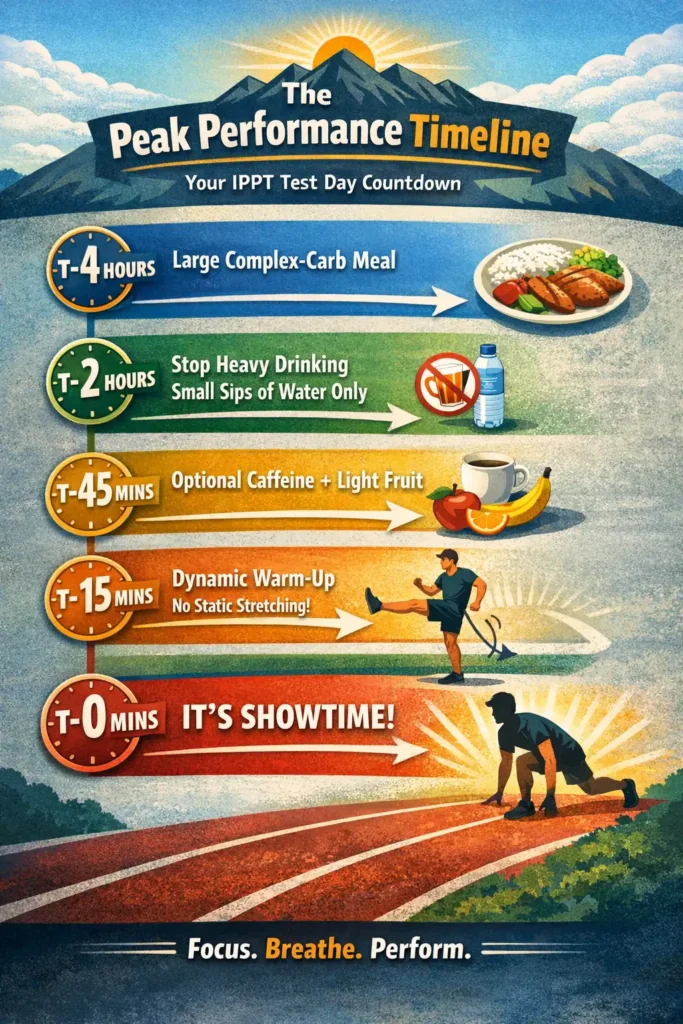
The Peace of Mind Protocol
IPPT is not just about muscles. It is about confidence. When you walk into Maju FCC with a clear plan, proper fuel, and know how the system works, your mind stays calm. No kan cheong. You just execute, rep by rep, lap by lap.