How Smart NSmen Avoid Fines Even When Things Go Wrong
TL;DR: Don’t disappear when you miss NS duties. Reply early, show proof, and most cases won’t escalate into fines or worse.
Introduction: The Reality of the “Red Letter”
Most NSmen do not get into trouble because they are trying to break the law. From what I see on the ground, many cases start with simple administrative blur-ness. Missed SMS. Old address not updated. Letter unopened. Then one day, the red letter arrives and panic sets in.
Here is the hard truth. Once you ORD, the Enlistment Act becomes the legal backbone that governs your NS life. It does not care whether the mistake was intentional or not. If you miss your obligations, the system moves forward automatically. What starts small can escalate fast if you do not act early.
Risk 1: The Overseas Exit Permit Trap
Tell me something.
When you book a trip, what is the first thing you think about?
Flight. Hotel. Leave approved.
Exit permit usually comes last, or worse, not at all.
This is how many NSmen walk straight into trouble.
What is the real risk?
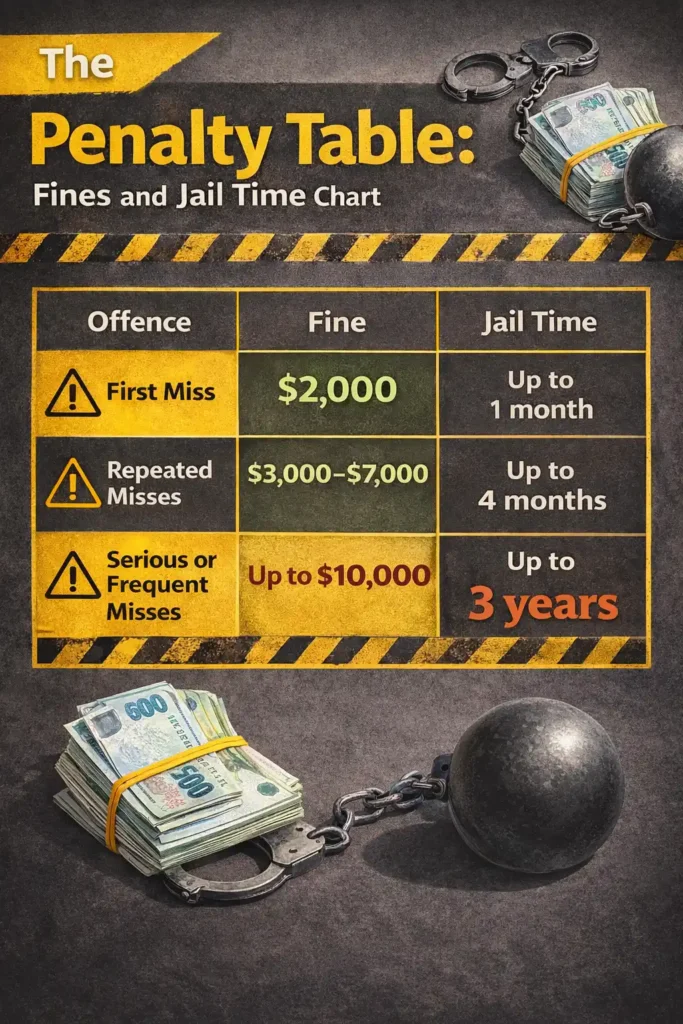
Under the Enlistment Act, leaving Singapore without a valid Overseas Exit Permit is treated as evasion, even if there was no bad intention.
The maximum penalty is serious:
Once it reaches this stage, saying “I forgot” does not help. The system looks at compliance, not intention.
While the rules are strict, NS isn’t just about avoiding trouble,it’s also about getting rewarded for your service. there’s a whole list of perks waiting for you. Check out our NS Benefits & Rewards Guide to see how you can make the most of your two years.
Know which group you belong to
Pre-enlistees (age 13 to 16.5)
- Exit permit required for extended overseas stay
- Parents usually handle this
- Responsibility shifts to the individual as he grows older
OR
NSmen
- Admin delays happen
- Documents can be incomplete
- Systems can be down
- Last-minute panic leads to mistakes
The fix: The 3-month buffer rule
This is the rule I drill into my trainees. The moment there is a chance you will be overseas for a long period, start the application. Do not wait for flight tickets to be confirmed.
Why the buffer matters:
Simple habits that prevent big problems
Many red letters go to old homes. Even if you never see it, the system counts it as delivered. Five minutes of admin can save you years of trouble.
This is not about being scared. It is about being smart and staying clean.
Risk 2: Missing the Call-Up (AWOL and Defaulting)
This one catches people off guard because it does not feel serious at first. A message comes in. You think you will deal with it later. Work gets busy. Days pass. Then suddenly, things escalate.
The SAF100 is not just an admin notice. It carries legal weight under the Enlistment Act. Once it is issued, you are officially ordered to report. Ignoring it is not the same as forgetting a casual message.
There is a big difference between missing small things and missing major call-ups.
If you miss a short briefing or a half-day activity, the outcome is usually mild. A warning, a small fine, or being told to attend another session. Painful, but manageable.
Missing a full ICT is a different story. If you fail to report for a one to two-week ICT without valid approval, it can be treated as AWOL. At that level, the consequences are much heavier. Detention, charges, and long-term records are possible. This is where people panic, not because they meant to default, but because they waited too long.
Here is the fix I always stress.
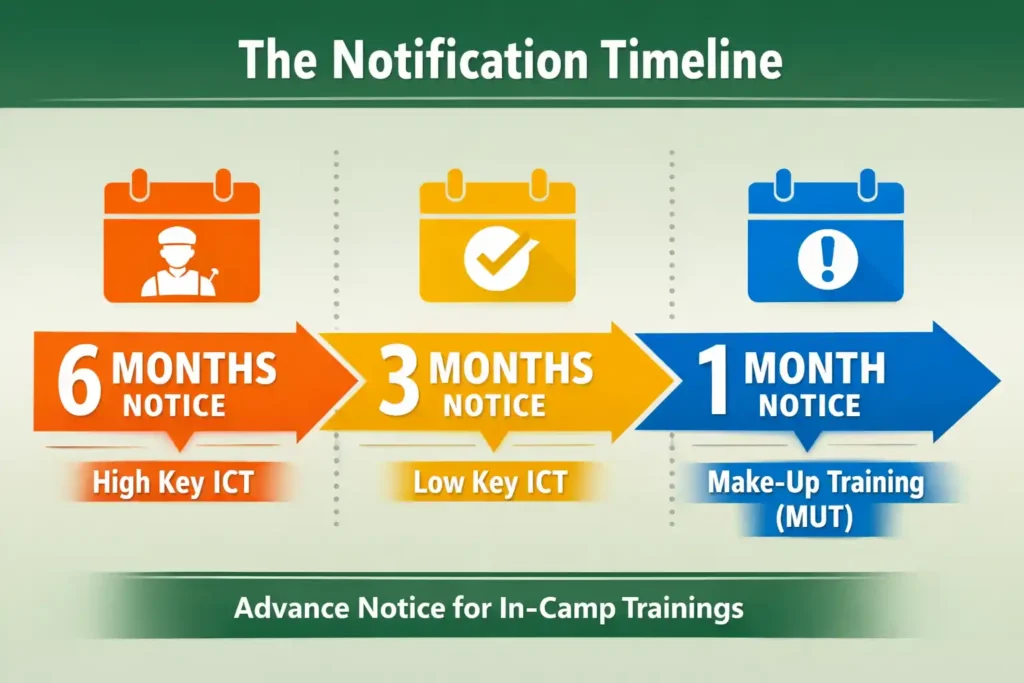
Follow the 10-day acknowledgement protocol. The moment you receive an SAF100, acknowledge it within 10 days. Even if you cannot attend, acknowledge first. This simple action tells the system you are contactable and responsive.
Why this matters. When SAF100s go unacknowledged, the system escalates. Registered mail gets triggered. Once that happens, the situation becomes formal and harder to resolve.
Acknowledging early buys you time. It opens the door to deferment, clarification, or rescheduling. Silence closes that door.
Most call-up problems do not start with bad attitude. They start with delay. Respond early, keep records, and you will avoid unnecessary trouble.
Risk 3: Medical and IPPT Defaulting
This one looks small on paper, but over time it causes a lot of unnecessary trouble. Missing a medical review. Skipping a follow-up appointment. Letting your IPPT window close without action. Individually, these feel minor. Together, they add up.
Under the system, missing medical reviews can lead to fines and repeat call-ups. Defaulting on IPPT is the same story. Once your birthday window closes without a valid result, the case moves forward automatically. No drama, no warning, just admin action. I have seen NSmen surprised by fines simply because they thought they still had time.
Here is how you stay clear.
Use the NS Portal properly. The automated booking system is there to help you, not trap you. Book early, reschedule early if needed, and keep screenshots of confirmations. Do not wait until the last month.
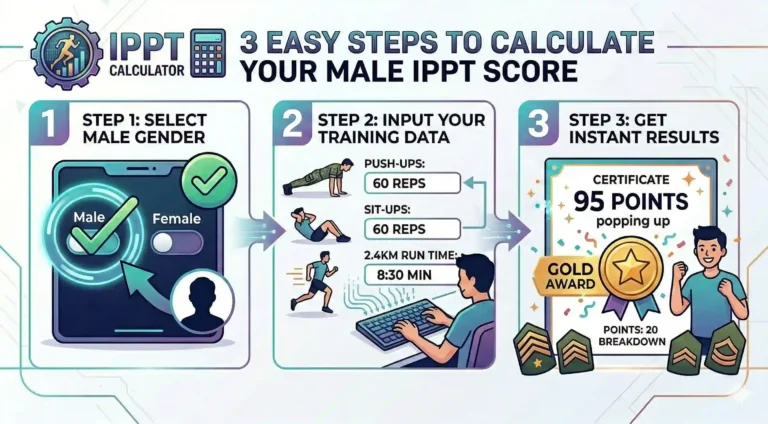
Next, aim for Pass with Incentive. Clearing IPPT early does more than give you cash. It acts as a buffer. Once you are done for the year, admin issues stop. No chasing, no stress. That is why I always say, treat IPPT as something to clear early, then forget about it. If you are planning your training, a quick check using an ippt calculator can help you understand your current score and how much improvement you need before attempting the test.
Small discipline saves big trouble.
The “Fix-It” Strategy: Recovery and Show Cause
If you are already here, chances are something went wrong and you are feeling a bit stressed. That is normal. I have seen many NSmen in the same situation. Missing a deadline does not mean everything is gone. What matters is how fast and how properly you respond.
Sooner or later, you may be asked to submit a Show Cause. Think of it as you explaining yourself in writing. Keep it simple. Write what happened, why it happened, and what you are doing to fix it. No need to sound clever. No need to argue. Just be honest and clear. Officers can tell when someone is trying to smoke through words.
Next, you need what I always call the Document Trio. This part very important.
Medical documents if you were genuinely sick or had an emergency
A work letter if you were stuck with urgent duties, signed by your company
Travel proof if you were already overseas when things happened
No documents, very hard to help you. Sad but true.
Then comes communication. Email CMPB or your unit S1 first. Keep the message polite and short. After that, follow up if needed. Do not disappear. Silence makes things worse.
Conclusion: Communication is the Best Weapon
After all these years coaching NSmen, this is the biggest lesson I can share. SAF would rather see you show up than collect your money through fines. Most problems become serious only when communication stops. The system is strict, yes, but it still works with people who respond early and properly.
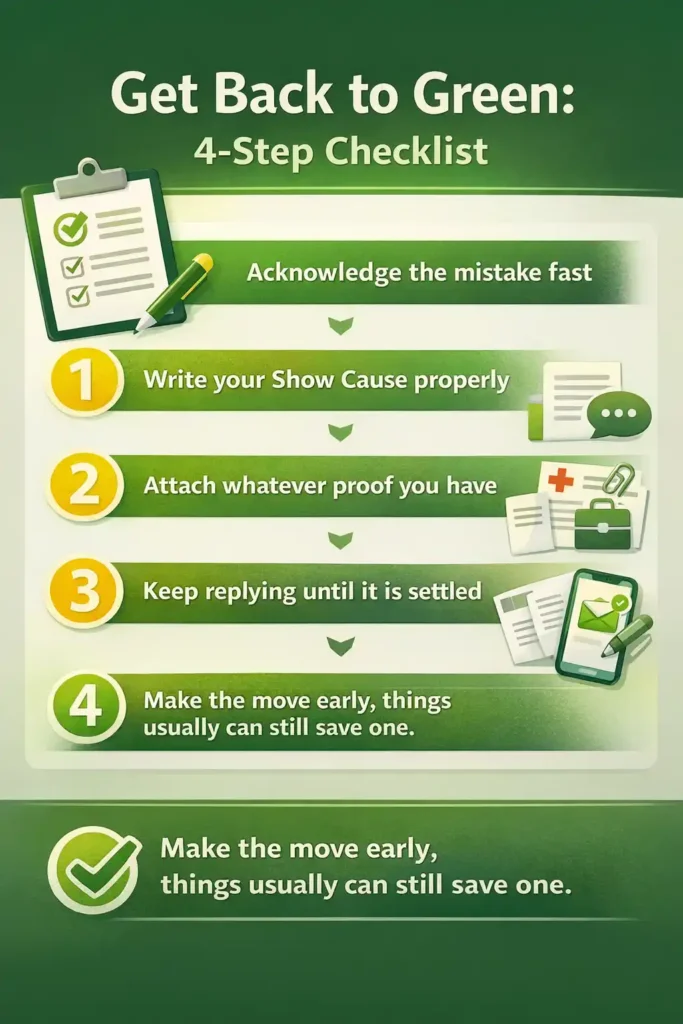
If you know you cannot make it, speak up early. Apply for deferment, explain clearly, and provide proof. Do not wait until the deadline pass then hope it goes away. That almost never ends well.
NS life is long. Handle admin properly, communicate early, and you will avoid most trouble. Simple things, but see already, many people forget.