The NS Master Roadmap – Mapping Your Journey from 13 to Enlistment

TL;DR: Navigate the pre-enlistment roadmap from registration to medicals, and learn to “buy back” 8 weeks of your life by skipping the PTP phase.
The Countdown You Didn’t See Coming
Most guys think National Service starts on the day they report to Tekong. In reality, the system starts tracking you much earlier, from around age 13. Exit permits, registration letters, medical screenings, fitness requirements. All these come long before enlistment, and missing any of them can quietly snowball into problems later on.
This is not a lecture on rules or a scare piece about punishment. Think of this as a strategy guide. If you understand the timeline early, you can plan properly, manage your time, avoid unnecessary fines or legal trouble, and walk into enlistment with fewer surprises. NS is compulsory, but stress and mistakes are not.
For the official legal details and policies, always refer to OneNS, but this guide will help you understand how things play out in real life.
The Early Years (Ages 13–16)
At this stage, most families honestly not thinking about NS yet. The boy still in school, growing up, worrying about exams, friends, and holidays. NS feels far away, like later problem. But quietly, from around age 13, the system already starts. One common thing people miss is the Exit Permit. Long overseas trips need approval, but many parents don’t know this. So they plan everything first, tickets buy already, then suddenly realise something wrong. Very sian moment, and nobody intended to break rules, just blur.
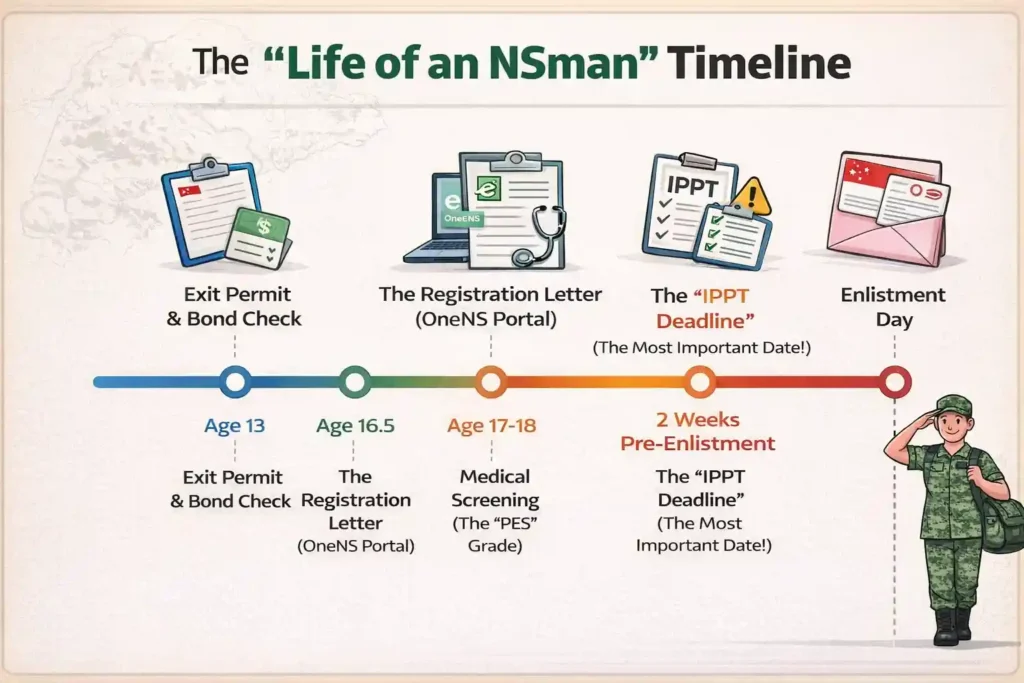
Around 16 and a half, things start to feel more real. This is when the first registration notice comes in and the boy must register on the OneNS portal. Some treat it like normal admin, do later, but actually this is the point where SAF expects response. Address must be updated, letters must be opened. Cannot pretend never see.
This part important to say properly. These are legal requirements, not suggestions. If ignored for too long, fines or worse can come in. Sounds scary, but actually very easy to avoid. Just pay attention early, reply on time, and don’t wait until things become kan cheong for no reason.
The Big Screening: 5 Hours at CMPB
This is usually the day NS starts to feel real. Until now, it was letters, portals, and messages you could mentally push aside. At CMPB, you show up in person, sit around, wait your turn, and slowly realise this is not just admin anymore. For most boys, expect to be there around five hours, sometimes more if it’s crowded.
First, a very practical reminder. CMPB has moved. It is no longer at the old Depot Road location. The current centre is at Hillview, just across Cashew MRT. This still trips people up. I’ve seen families rush in late because they went to the wrong place. Start the day right, don’t make life harder than it needs to be.
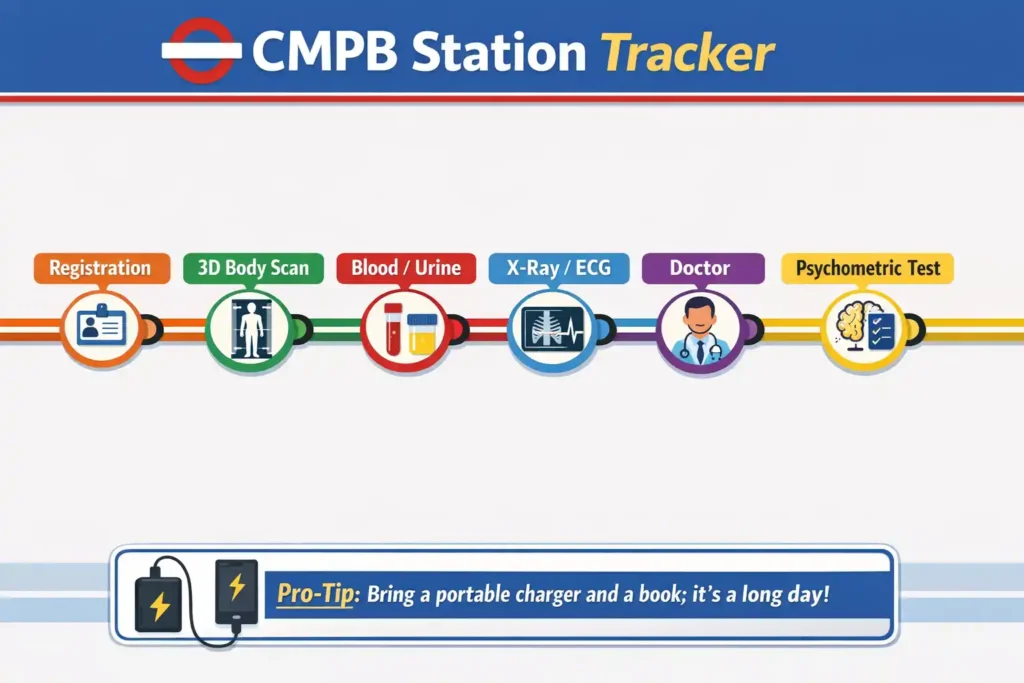
Once inside, you move through a series of checks. It feels long, but each station has a purpose.
What you’ll usually go through:
The psychometric part is where some boys get nervous. Don’t overthink it. Just answer honestly. Acting garang or trying to look “mentally strong” for show often backfires.
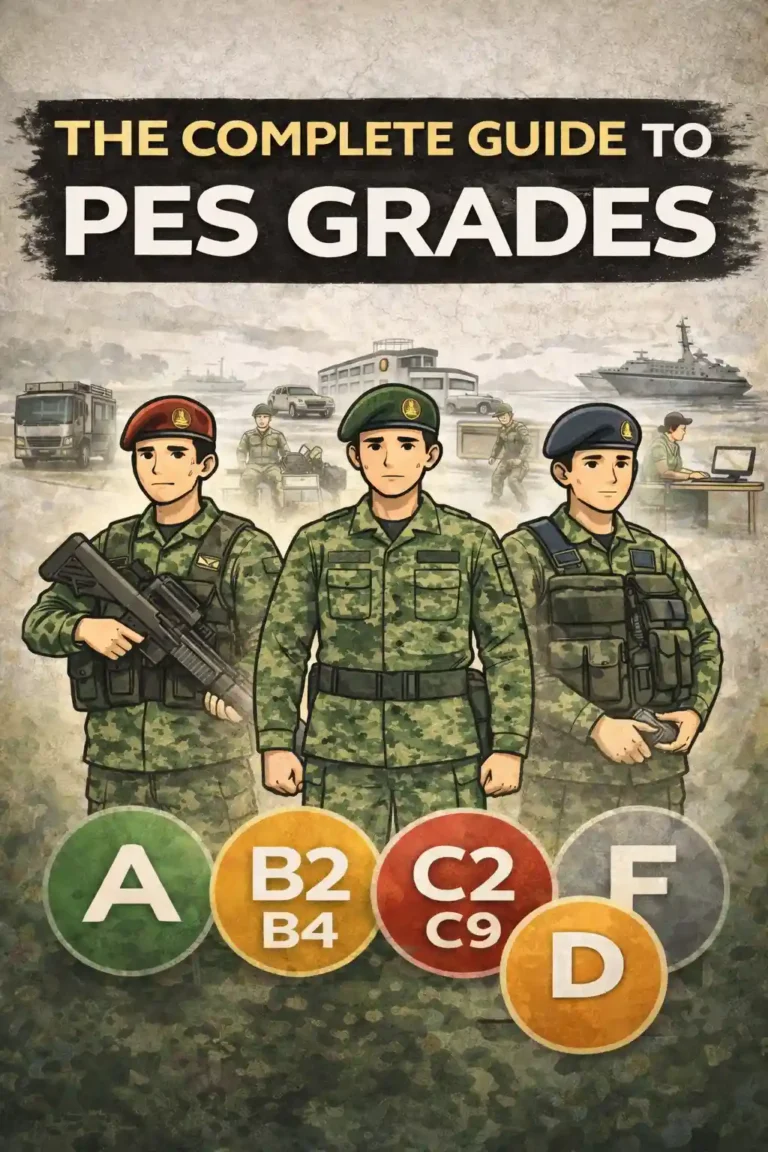
Then comes the part everyone cares about. The PES grade.
Think of PES like the SAF’s Sorting Hat. It decides where your body fits best. Not good or bad, just different roles.
- Some grades lead to front-line combat training
- Others point toward support, logistics, or admin roles
None of them are shameful. Each one affects training intensity, IPPT requirements, and daily routine in camp. If you want a clearer picture of what each PES grade really means in daily NS life, from training load to vocations and IPPT expectations, we’ve broken it down fully in our complete PES grading guide.
Go prepared, bring proper medical documents, and don’t try to outsmart the system. It usually knows.
Education & Deferment: How School Fits into NS
This is where many families get confused, especially when school timelines don’t line up nicely with enlistment dates. The key thing to understand is that not all education qualifies for deferment.
The “First Bar” rule is the basic one. SAF allows deferment for your first major qualification, usually:
- GCE A-Levels
- Polytechnic Diploma
Once that is completed, deferment normally ends. A common misunderstanding is assuming a Degree automatically qualifies for deferment. It doesn’t, unless you’re already granted approval under specific schemes. This catches people by surprise, so don’t assume. Always check early.
For overseas students, there are extra steps. If you studied in an international school or overseas system, SAF may ask for:
- School letters
- Academic calendars
- Proof of graduation dates
This is not to make life difficult, but to verify timelines properly. Missing documents can delay things, so better to prepare earlier.
Then there’s the awkward part nobody tells you about. The “gap” months. Some finish school in May, but only enlist in October. During this period, you are still under NS obligations. Update your contact details, respond to messages, and don’t disappear overseas without permission. Many problems start here because people think they are “free” already.
Short version: finish school, but stay contactable. Don’t go blur during the gap.
The “8-Week Freedom” Strategy
This is hands down the most important part of the whole NS roadmap. Miss this, and you lose time you can never get back.
First, you need to understand the difference between PTPand Enhanced BMT.
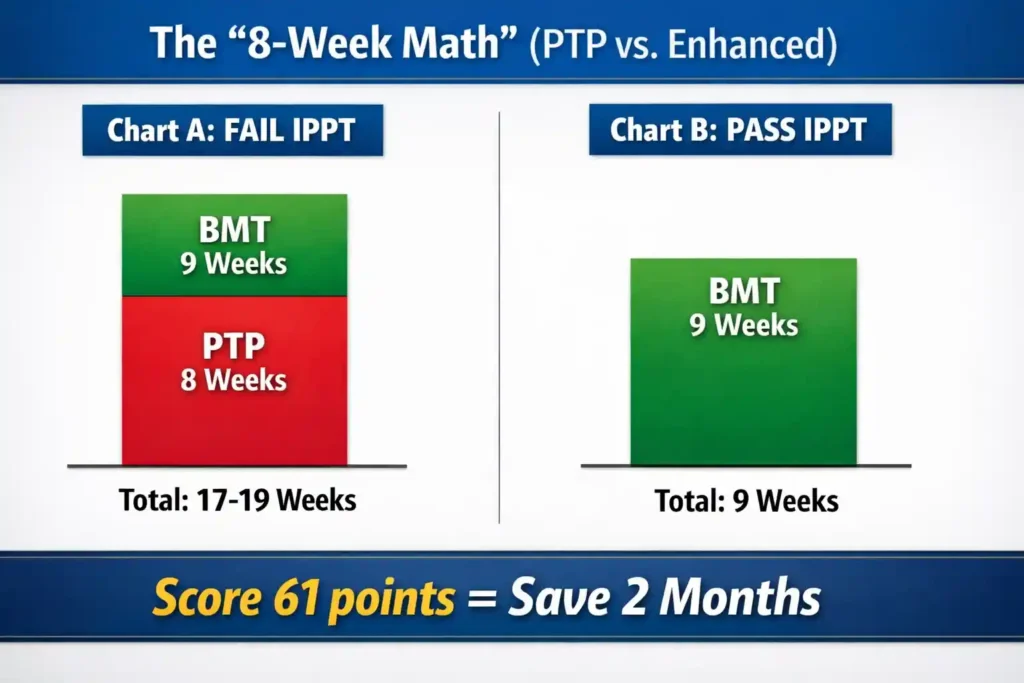
If you fail or skip your Pre-Enlistee IPPT, you go PTP. That means extra physical training and a longer BMT. If you pass, you go Enhanced BMT, which is shorter and more focused. Same enlistment, same outcome, just very different journey.
Here’s the part many people don’t realise early enough.
Passing IPPT is not about ego, not about flexing, not about being “fit enough”. It’s about time.
61 points is the magic number.
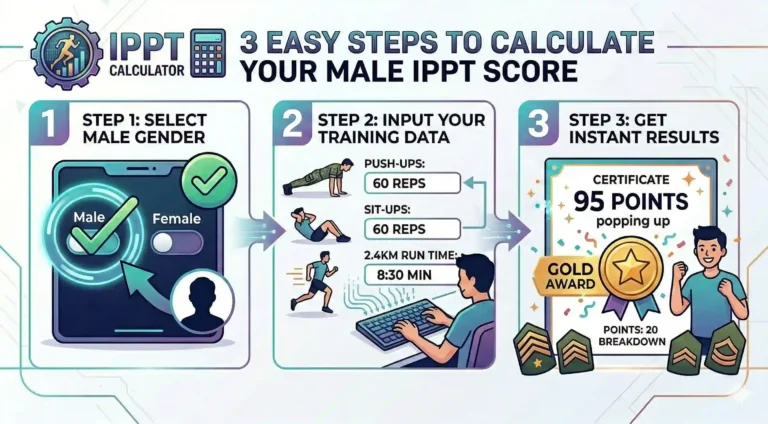
Score at least 61, with a minimum of 1 point per station, and you qualify for the 8-week reduction in full-time NS. That’s two full months of your life. School, work, travel, rest. Gone if you miss it. Cannot appeal back. To see exactly where you stand and how many points you need to skip the PTP phase, plug your latest stats into the IPPT Calculator.
I’ve seen many guys say, “Never mind lah, just two months.” Then later, they regret. Very sian feeling.
Now the deadline, and this part people always blur.
You must pass your IPPT at least 14 days before your enlistment date. Not one week. Not last minute. The system needs time to update. Pass too late, still PTP.
The smart move is simple.
Train early. Attempt early. Give yourself buffer. Don’t wait until everything become kan cheong.
This is one strategy that really pays off.
Conclusion: Take Control of the Timeline
NS is compulsory, but stress and confusion don’t have to be. The earlier you understand the timeline, the easier everything becomes. When you stay organised, reply on time, and plan ahead, most problems simply don’t happen. You walk into each stage knowing what’s coming, instead of reacting last minute. That alone makes the transition into NS much smoother, for both the recruit and the family.
This is just the start. Next we’ll go inside the CMPB Medical Screening and walk through exactly what those five hours look like, so you know what to expect before you step through the door.