Deciphering the Code: The Ultimate Singapore PES Grade Guide
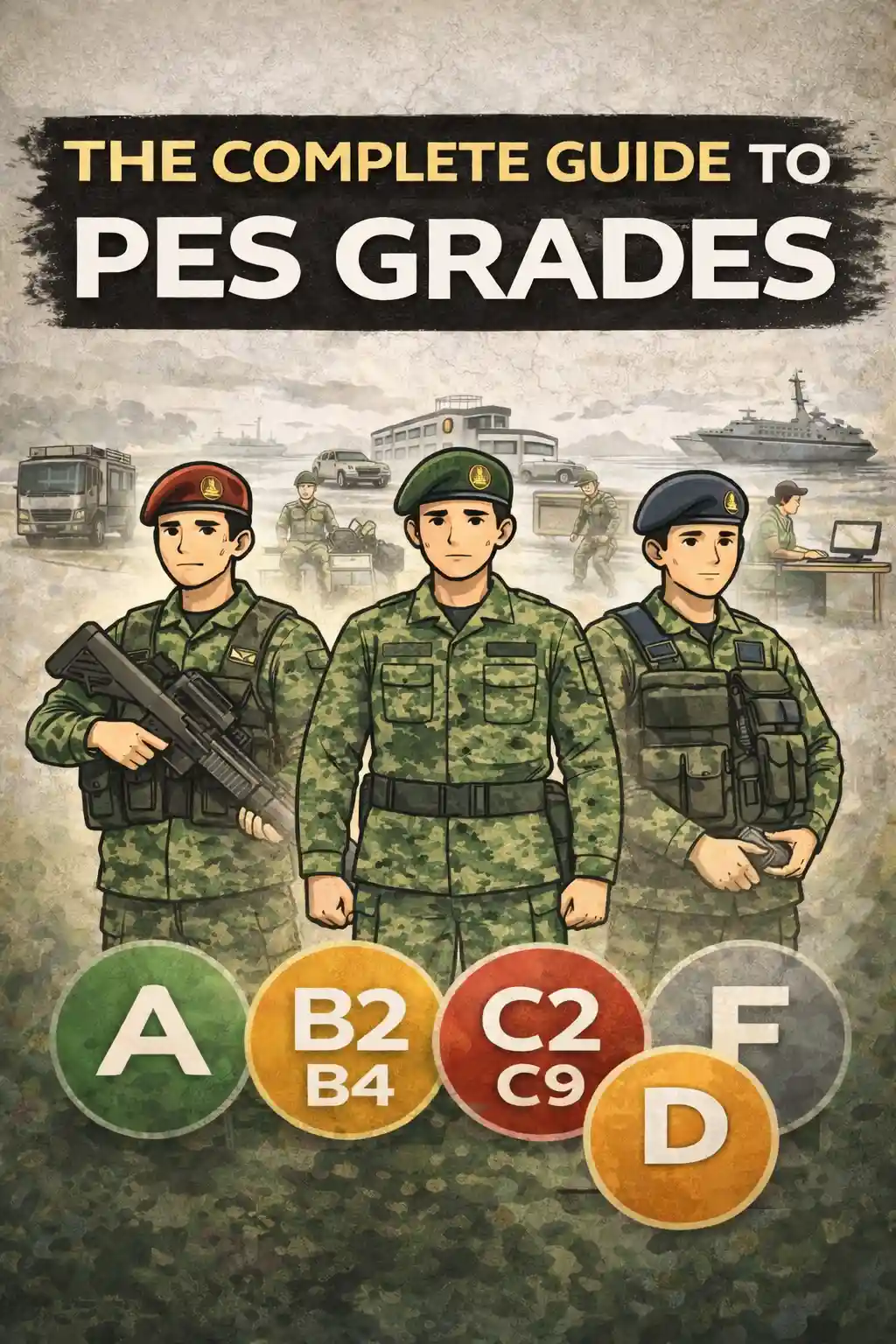
TL;DR: Your PES grade shapes your NS role, training intensity, and IPPT requirements, and knowing what each tier really means helps you plan smart, avoid mistakes, and serve without unnecessary stress.
You just got your PES grade and suddenly your whole NS journey feels very real. I see this face all the time at CMPB Depot Road and Nee Soon PES Centre. That mix of shock, relief, or pure kan cheong. Trust me, your PES letter matters more than you think.
PES decides what vocation you go, how tough your training will be, whether you need to pass IPPT, and even how much allowance you take home. PES A and B usually mean chiong training and higher risk but also more combat roles. PES C and E mean lighter duties but still real responsibility. No grade is good or bad. Just different paths.
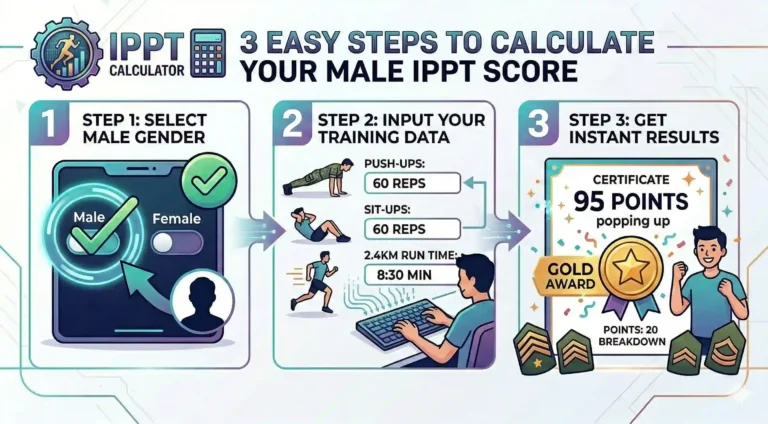
If fitness is part of your journey, it helps to know where you stand early, and a quick check with an IPPT calculator can give you a clearer idea of your current score and what areas need more work.
I will break it down properly so you know exactly what to expect and how to plan smart.
The Combat Tier PES A and B1
If you are PES A or B1, you are considered full combat fit. This is the pool where Commandos, NDU divers, Guards, Infantry and other frontline vocations come from. I’ve coached many of these guys and I’ll tell you honestly, this tier is not about just passing IPPT. It is about consistency and mental toughness.
For Commandos and Divers, your IPPT score must be strong across all three stations. Just scraping pass won’t cut it. Your run timing, push ups and sit ups must all be solid. Guards also look at endurance because of the constant training and load carrying.
Many trainees think PES A means auto strong. Wrong. I’ve seen PES A guys who underestimate training and end up injured. The ones who survive are those who train smart, rest well, and don’t be garang for no reason.
If you are aiming for this tier, prepare early and respect your body.
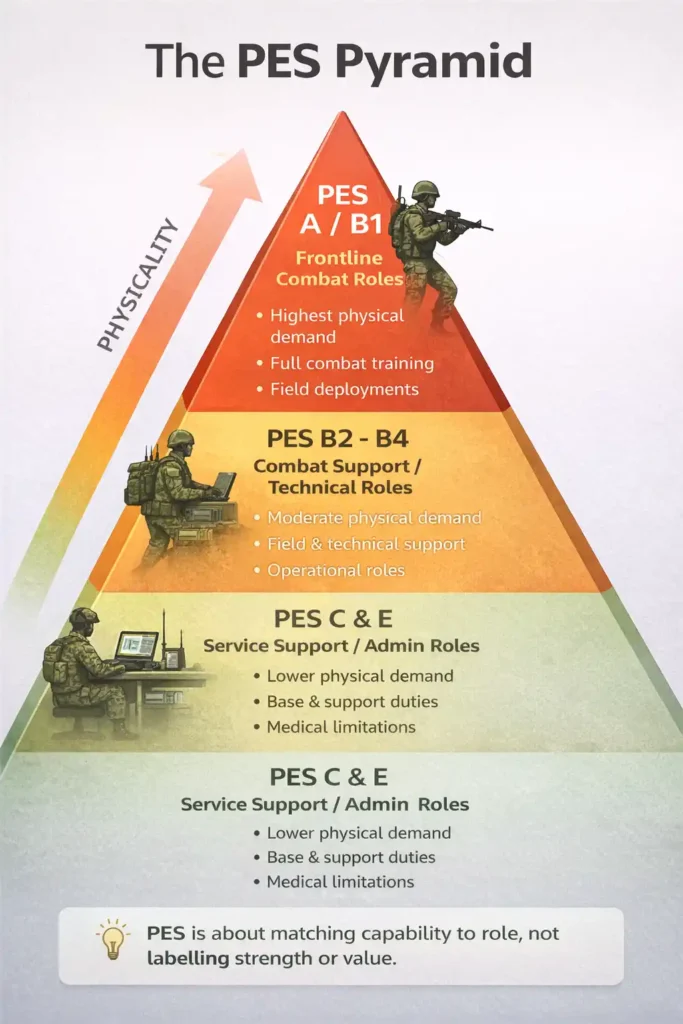
The Support Tier PES B2, B3, B4
This tier is where things get a bit more nuanced and a lot of people get confused. PES B2, B3 and B4 still mean you are fit enough to serve and yes, many of you will still go to BMT. I see trainees come to me after CMPB Depot Road medical check asking why they still need enlist when they have injury.
Here is the truth. You are fit, just not fully combat fit.
You may have asthma, old knee injury, shoulder issues, flat foot or past surgery. So you go BMT but with excuses. Excuses means modified training. Maybe no long route march, maybe no SOC, maybe no heavy load. It is not keng. It is SAF managing risk.
Common mistake I see is people try to push like PES A. Then end up worsen their injury. Follow your excuse list properly. Train within limits. You still can pass IPPT and serve well.
I always tell my trainees. PES B is about smart effort, not ego.
The Service Tier PES C2 and C9
This tier is for those who are non combat fit but still fully able to contribute. PES C2 and C9 usually mean admin, logistics, store, clerk, transport or support roles. No rifle, no outfield, no chiong sua. But don’t misunderstand, this is still proper NS.
I’ve coached many PES C guys who feel a bit paisehat first. They think their role not important. That mindset is wrong. Without admin and logistics, the whole unit cannot function.
Training is lighter. PT is controlled. Some still need to do IPPT depending on medical review, some do modified fitness. You will likely be posted to camps where routine and discipline matter more than physical strength.
From places like Kranji Camp or unit HQs, I always remind my trainees. Serve professionally, take care of health, and don’t compare with others. Every PES has a role to play.
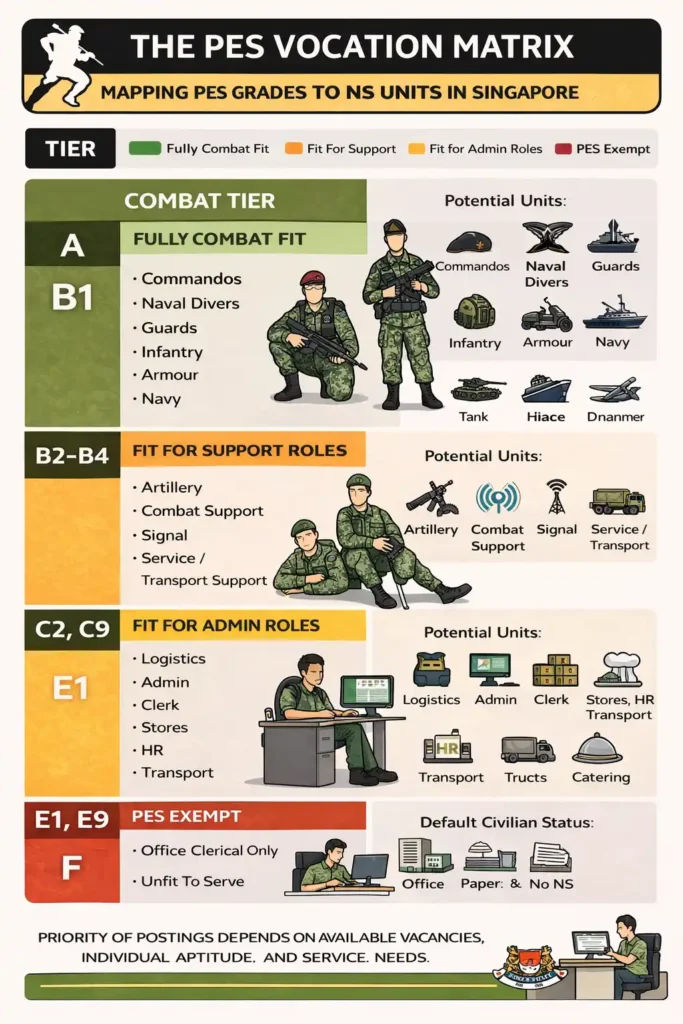
The Exemption Tier PES E1, E9 and F
This tier is the most misunderstood and the one with the most rumours flying around. PES E1 and E9 mean you have significant medical limitations. This can be physical, mental health related, or long term conditions. You are usually posted to desk based or very controlled roles. No field training, no weapons, no IPPT in most cases.
I see many people think PES E is free life. Not true. You still report to camp, still work office hours, still answer to superiors. Just that the environment is safer for your condition. Reviews are done at SAF Medical Centres, sometimes after referrals from CMPB or camp MO.
PES F is different. This is permanent unfit for service. It is not given easily. Only for serious conditions where NS would worsen health. Once given, it usually does not change.
If you are in this tier, don’t feel bo pian. Health always comes first.
PRO TIP : The “Combat Fit” Pride
If you’re PES A or B1, don’t just see it as ‘more work.’ It’s the only tier that qualifies you for the $500 IPPT Gold incentive and the chance to lead in Command Schools. It’s tough, but the payoff (and the stories) are worth it.”
PES D: The Survival Guide to Singapore’s Most Frustrating Medical Grade
You went for your medical at CMPB Depot Road expecting a clear answer, then suddenly you see PES D. No A, no B, no C. Just D. Straight away the mind starts racing and you feel kan cheong (nervous). Relax. PES D does not mean problem soldier or cannot serve.
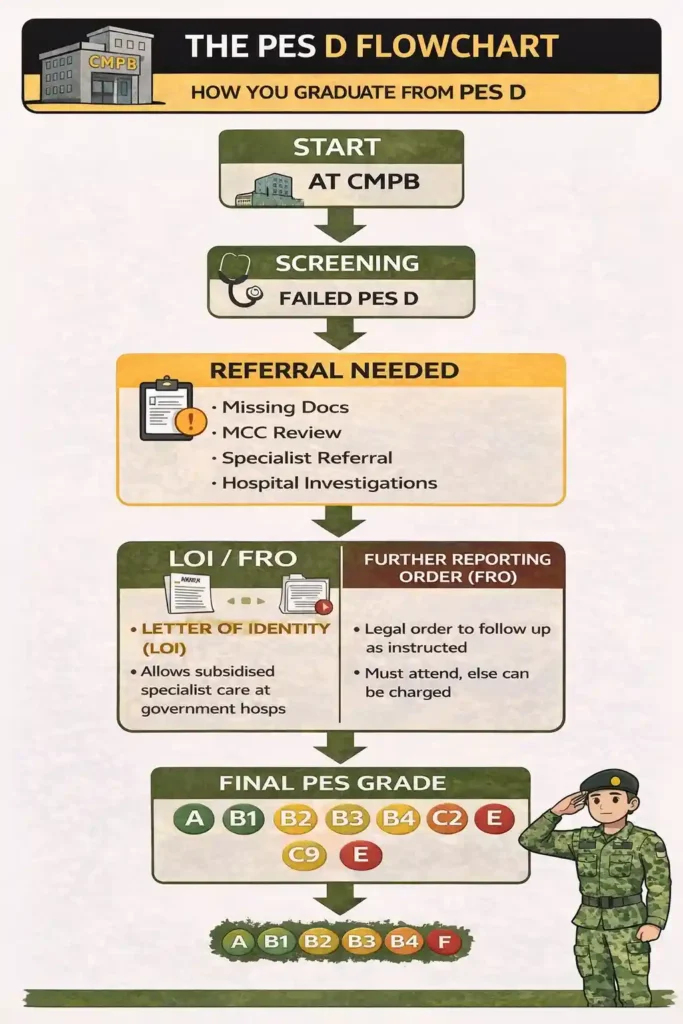
PES D simply means pending. SAF needs more medical information before deciding your final PES. Maybe specialist report, scan, or review from hospital. Think of it as SAF saying show me the receipts first. This stage is frustrating because you wait, but it is normal. Be patient, submit documents properly, and don’t assume the worst.
The 4 Common PES D Scenarios
When you get PES D, it usually falls into one of these four situations. Knowing which one helps you worry less.
Missing medical documents
You declared a condition but never bring hospital reports, X rays, or specialist memo. Without proof, SAF cannot decide your PES. Very common, especially for pre enlistees.
MCC review
Your case is sent to the Medical Classification Centre. This is where SAF doctors discuss borderline cases together. It does not mean serious problem. Just needs senior review.
Specialist referral
CMPB may ask you to see a government specialist to confirm diagnosis. This step is normal and happens to many PES D cases.
Hospital investigation
Further tests or scans are needed. This takes the longest and many recruits feel sian (tired and frustrated), but it is part of the process and nothing unusual.
The Financial Lifeline LOI
This part very important and many people blur. The Letter of Identity allows you to see SAF approved specialists at subsidised rates. Without LOI, you may pay hundreds from your own pocket. With LOI, SAF covers or heavily subsidises the cost. Always check before booking any appointment.
PRO TiP: The Memo Myth
Bringing a memo from your family doctor doesn’t automatically change your PES. The Medical Board only cares about memos from Specialists. Don’t waste money on a GP letter if you’re looking for a down-PES.
The Legal Side FRO
The Further Reporting Order is not optional. It is a legal instruction to attend reviews or submit documents. Ignore it and you can be charged. I always tell my trainees don’t play play with FRO. Even if busy or overseas, inform CMPB early.